
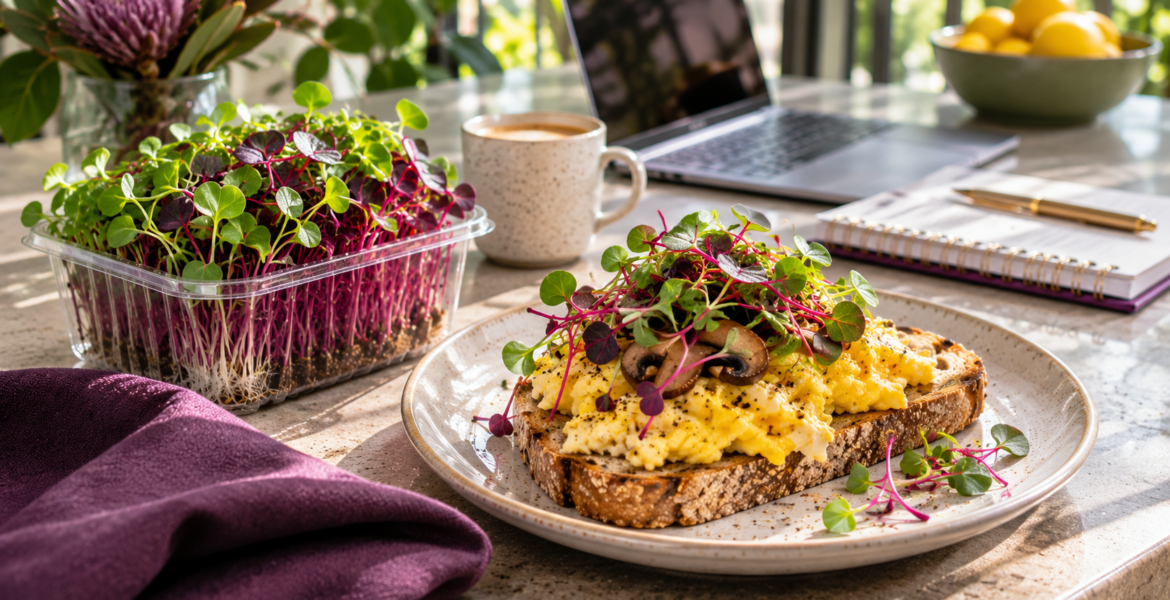
November has a way of filling every gap in the diary. Year-end deadlines land at work. The kids have prize-givings and concerts. There is a function, a braai or a farewell almost every weekend.
Somewhere in all of that, good food is usually the first thing to slip. Breakfast becomes coffee. Lunch becomes whatever is closest. Dinner becomes takeaways, again.
The good news is that eating well this season does not need a new meal plan or an hour in the kitchen. It can start with a handful of greens and about 30 seconds.
Why nutrition slips when life gets busy
When time is short, we choose what is fast, not what is fresh. Vegetables need washing, chopping and cooking, so they are often the first thing left out.
The result is a plate that fills you up but does not give your body much to work with. Over a busy six or eight weeks, that adds up, just when you need your energy most.
The fix is not perfection. It is finding fresh food that takes no effort to add to what you already eat.
What are microgreens?
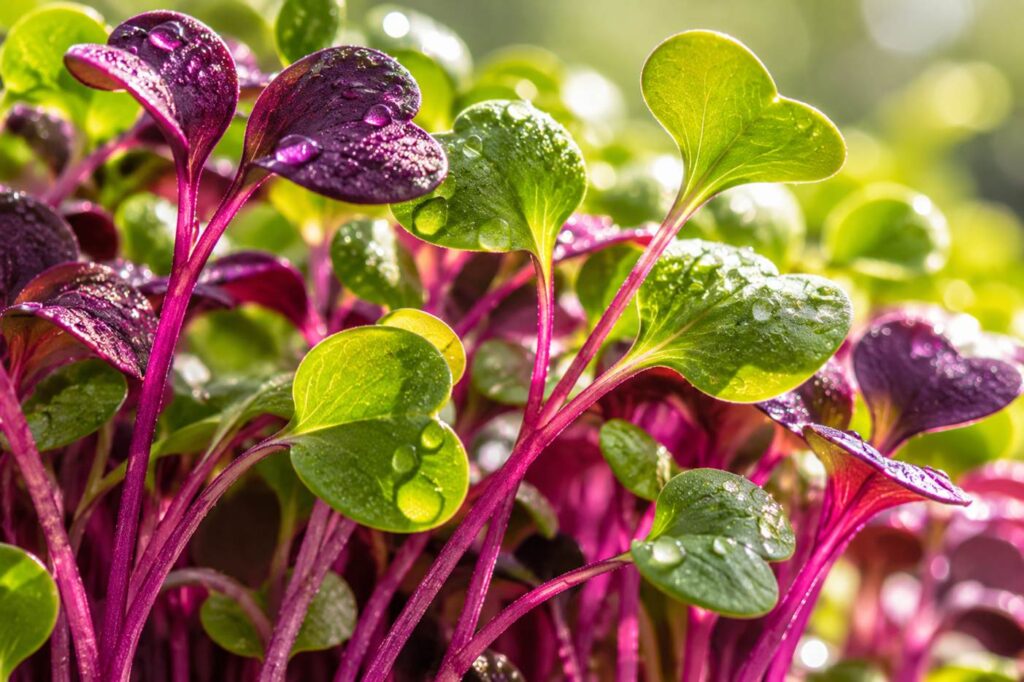
Microgreens are young vegetable and herb plants, harvested just after their first true leaves appear. That is usually 7 to 21 days after the seed sprouts.
They are not the same as sprouts. Microgreens grow in light, develop real leaves and are cut above the root. Think of radish, pea, sunflower or broccoli, picked at their most tender stage.
They are small, colourful and full of flavour, from the peppery kick of radish to the sweet crunch of pea shoots.
Small greens, serious nutrition
Microgreens are not just a garnish. In 2012, researchers at the US Department of Agriculture tested 25 types of commercially grown microgreens (Xiao et al., Journal of Agricultural and Food Chemistry).
They found that many microgreens held higher concentrations of vitamins C, E and K and beta-carotene than the mature leaves of the same plants. For some nutrients, levels were up to 40 times higher.
Here is what those nutrients do for you:
- Vitamin C supports normal immune function and helps protect cells.
- Vitamin K supports normal blood clotting and healthy bones.
- Vitamin E is an antioxidant that helps protect your cells.
- Beta-carotene is converted by your body into vitamin A, which supports normal vision and skin.
Because microgreens are so concentrated, a small handful adds real value to a meal. They are a complement to vegetables, not a replacement for them, but they make it far easier to eat something fresh every day.
5 effortless ways to eat microgreens this week
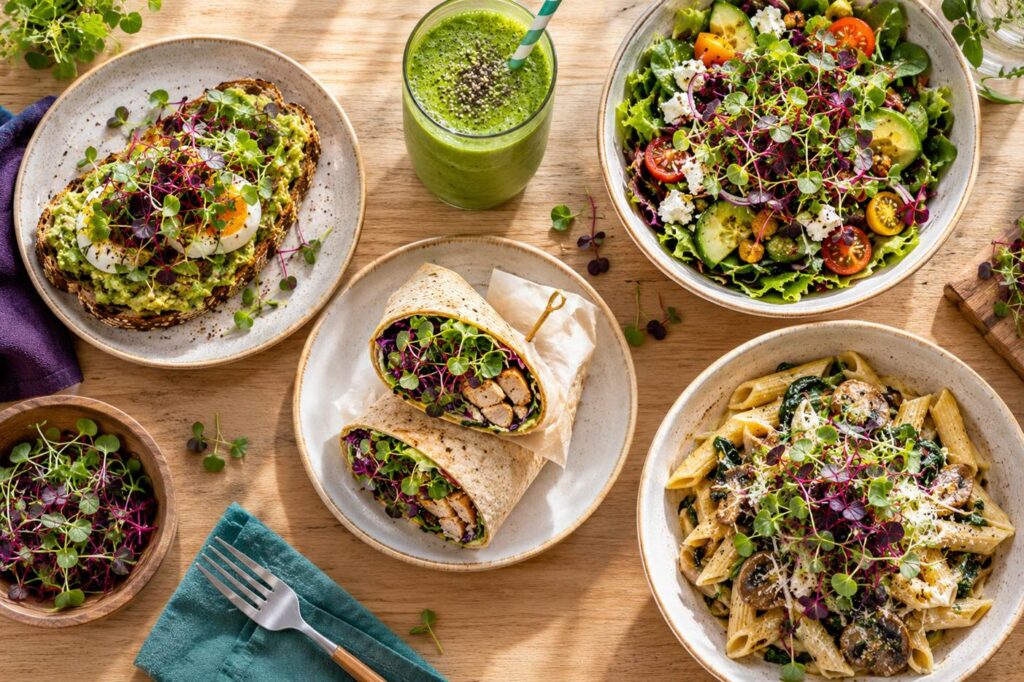
- Breakfast: scatter them over scrambled eggs, an omelette or avo toast.
- Lunch: pile them into wraps, sandwiches and rolls for crunch.
- Dinner: toss them over pasta, stir-fry, curry or pizza just before serving.
- Snack: blend a handful into your morning smoothie.
- Salad: use them as the base, or mix them through leaves you already have.
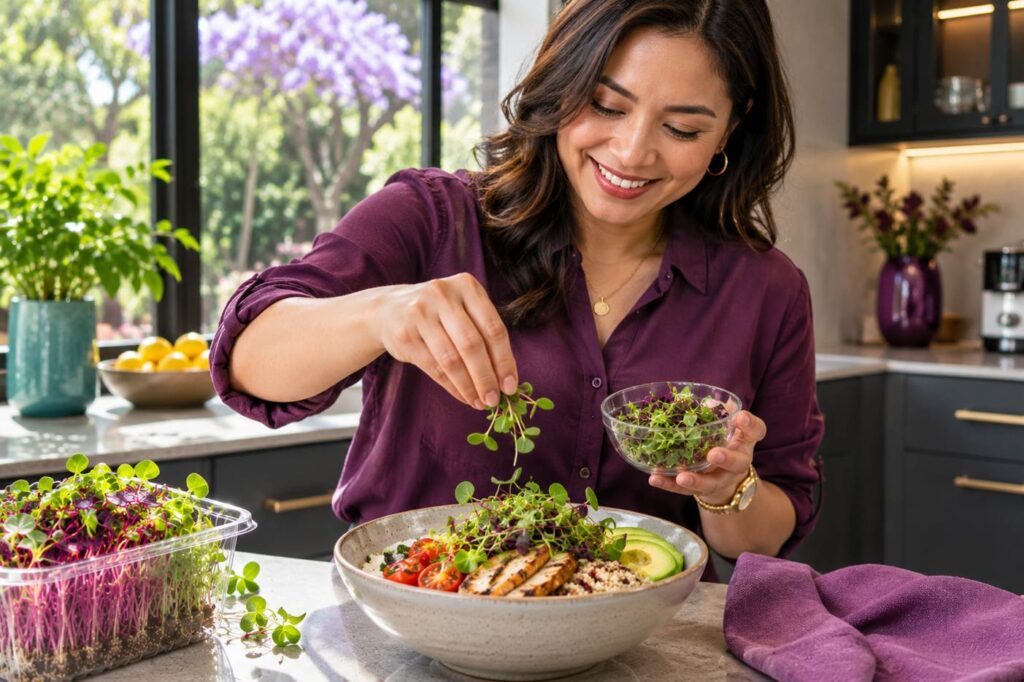
No cooking, no chopping. Open the punnet, take a handful, done.
Why fresh and local matters
Some nutrients, especially vitamin C, start to decline after harvest. The longer produce spends in transport and storage, the more it can lose.
That is why we grow our Mighty Microgreens and Mighty Mushrooms in controlled grow rooms close to home. They are grown without pesticides, harvested to order and delivered while they are at their freshest, not after days in a cold chain.
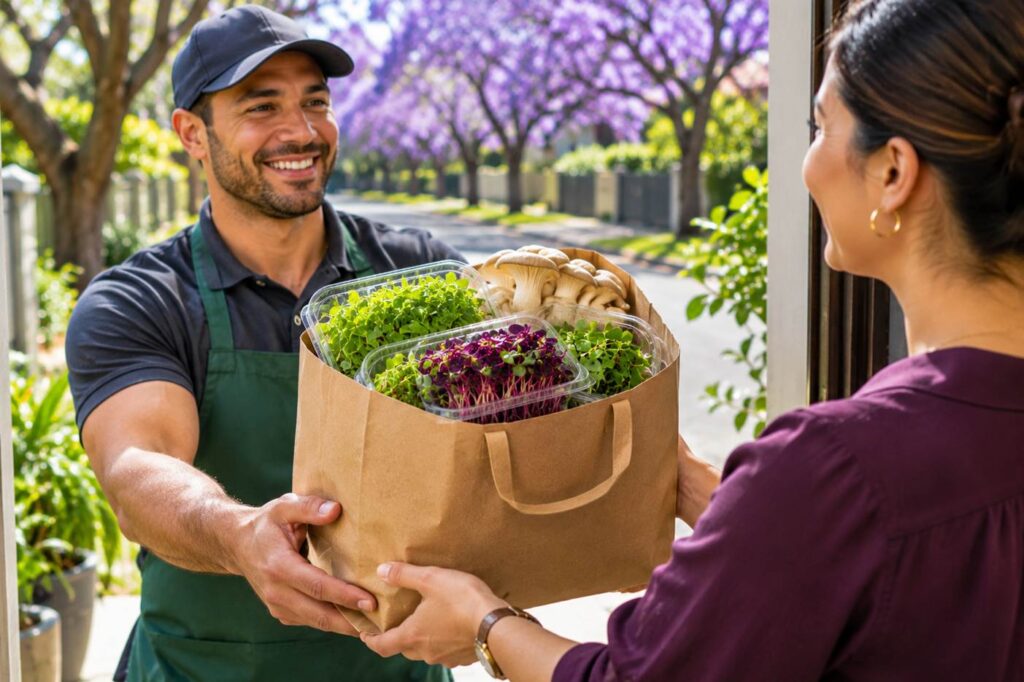
Fresh in Bedfordview, within 24 hours
This festive season, let the fresh food come to you. We now deliver organic Mighty Microgreens and Mighty Mushrooms across Bedfordview, straight to your door within 24 hours of your order.
Order now: https://thelocalfarmer.co.za/shop/
Follow The Local Farmer on Instagram and Facebook for easy recipes and fresh tips all season.
References: Xiao, Z., Lester, G.E., Luo, Y. and Wang, Q. (2012) ‘Assessment of vitamin and carotenoid concentrations of emerging food products: edible microgreens’, Journal of Agricultural and Food Chemistry, 60(31), pp. 7644–7651.