
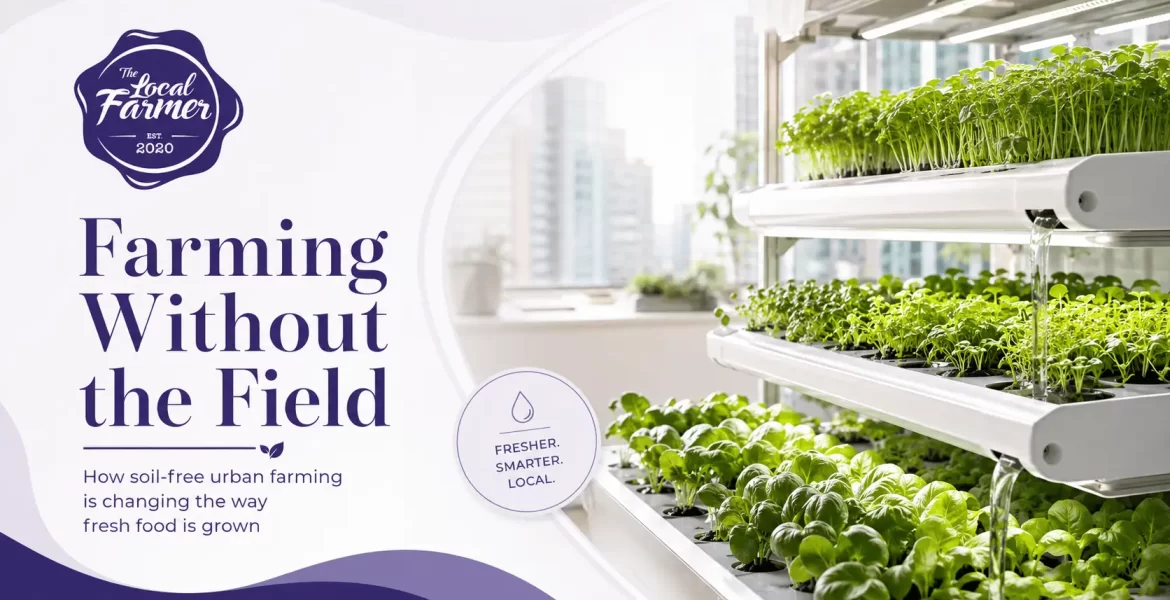
How soil-free urban farming is changing the way fresh food is grown
For generations, farming has been associated with large fields, open land, tractors, and long distances between the farm and the consumer.
But what happens when cities grow, land becomes limited, and water becomes more precious?
Farming has to get smarter.
Soil-free urban farming makes it possible to grow fresh produce in controlled spaces closer to the people who will eat it. It allows food to be produced inside cities, buildings, grow rooms, and other spaces that traditional farming may not be able to use.No field required.
What is soil-free farming?
Soil-free farming grows plants without relying on traditional soil. Instead, the plants receive the water, nutrients, light, and support they need through a carefully managed growing system.
This creates a cleaner and more controlled growing environment.
Because the grower can manage conditions more precisely, soil-free systems can reduce unnecessary water loss, protect plants from many outdoor threats, and support reliable production throughout the year.It is farming with fewer variables and far more control.
Using up to 90% less water
Water is one of agriculture’s most important resources. It is also one of the resources that cannot afford to be wasted.
Traditional outdoor farming can lose water through evaporation, run-off, and uneven distribution. Soil-free growing systems are designed to deliver water more directly to the plants.
Depending on the system and crop, this approach can use up to 90% less water than conventional farming methods.
That is a significant saving, particularly in areas where water security is becoming an increasing concern.Using less water does not mean producing less. It means using the resource more efficiently.
Grown without pesticides
A controlled growing environment also reduces exposure to many pests and diseases found in outdoor farming.
This makes it possible to grow produce without pesticides while maintaining close control over cleanliness and crop health.
For consumers, that means fresher, cleaner produce. For growers, it means a system that focuses on prevention, consistency, and responsible production.And for the planet, it means fewer unnecessary chemicals entering the growing environment.
Closer to the customer
Urban farming shortens the journey between harvest and plate.
Instead of produce travelling from a distant farm, through several warehouses and distribution centres, it can be grown much closer to restaurants, shops, schools, and households.
Shorter distances can mean:
- Fresher produce
- Faster delivery
- Less transport
- Reduced food waste
- Better local availability
- Stronger connections between growers and customers
Fresh food should not need a travel itinerary.
A practical answer for modern cities
Urban populations are growing, but available farming land inside cities is not.
Soil-free farming allows growers to make better use of smaller spaces. It transforms unused or overlooked areas into productive growing environments.
That could include:
- Indoor grow rooms
- Retail spaces
- Restaurant growing displays
- Warehouses
- Community facilities
- Small commercial units
The result is a flexible farming model that can adapt to the places where people already live and work.
The future is growing closer
The future of food is not only about producing more. It is about producing more intelligently.
Soil-free urban farming uses technology and careful growing practices to make better use of water, space, and time. It brings farming closer to the consumer and gives cities a practical way to improve access to fresh produce.At The Local Farmer, we call it urban farming done smarter.
Grow closer to your community
Explore The Local Farmer’s soil-free growing solutions and discover how fresh food can be produced using less water, less space, and no pesticides.